from Ivan Matić
Ivan Matić, Vice-Chair for the Mediterranean of the European Small Islands Federation (ESIN) and member of the Croatian Island Movement, took part in the CPMR Islands Commission General Assembly held on 29 April in Cagliari, Sardinia. The event gathered representatives of island regions, EU-level stakeholders and island organisations to discuss the future EU strategic framework for islands, island competitiveness and connectivity, and the just green and social transformation of island territories.
The Conference of Peripheral Maritime Regions (CPMR) is one of the main European political networks representing maritime and peripheral regions, and its Islands Commission is among the most important interregional forums dedicated to island issues in Europe. In this context, ESIN’s presence is particularly significant: it ensures that the perspective of small islands and local island communities is part of discussions that are often dominated by regional and institutional actors.
This year’s General Assembly took place at a particularly important moment, as the debate on the first-ever EU Strategy for Islands is entering a decisive phase. The political session of the Assembly focused specifically on how to shape the future EU strategic framework for islands and outermost regions in a way that better reflects their realities and ensures more targeted and effective EU support.
Ivan Matić contributed to Roundtable 2: “Best Practices for a just Green and Social transformation in EU Island Regions”, a session dedicated to how islands can ensure that the green and social transition is not only ambitious, but also just, inclusive and adapted to insular realities. The roundtable was framed around the idea that islands are on the frontline of the climate and environmental crisis while also facing structural social challenges, and therefore bear disproportionately high costs in adapting to the green transition and safeguarding social cohesion.
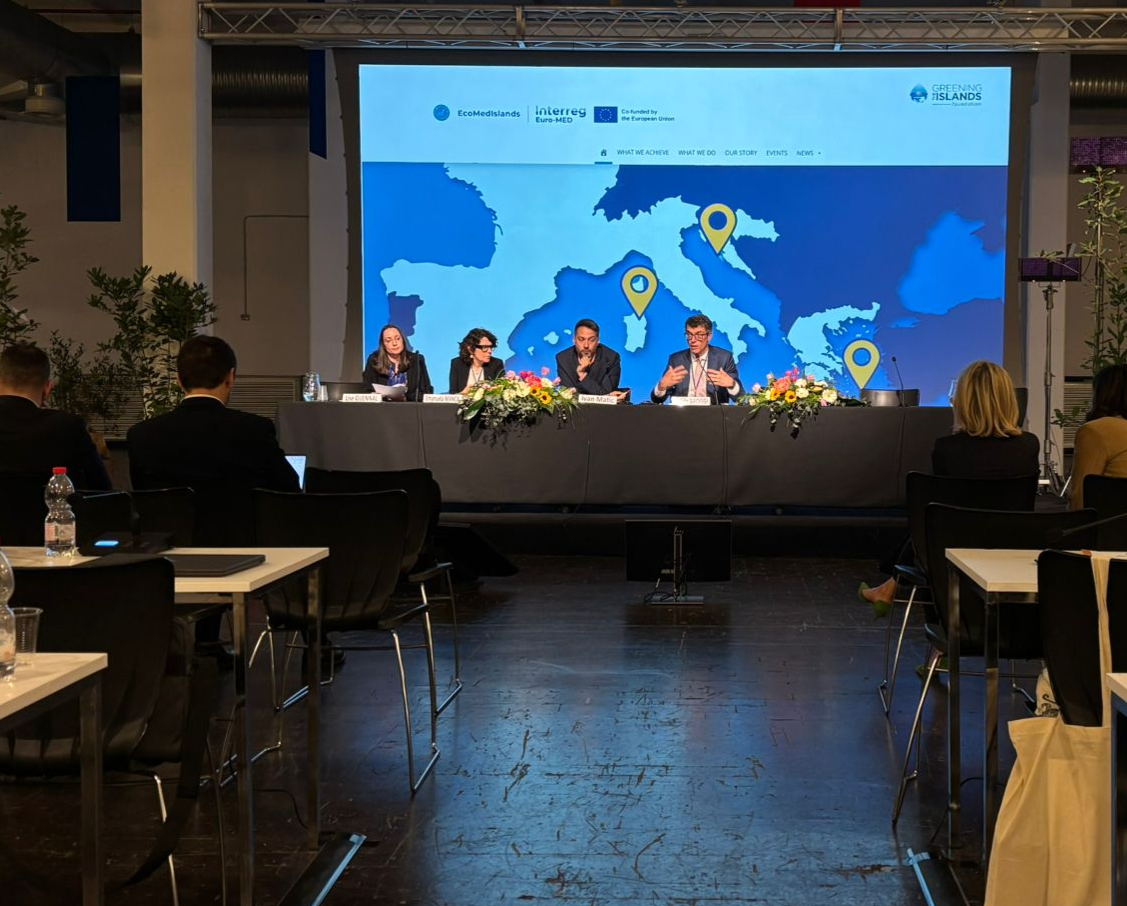
In his intervention, Matić stressed that questions of community participation and multilevel governance are not only island issues, but challenges faced by communities across the European Union. He pointed to the persistent gap between what citizens expect Brussels to do and what EU institutions can realistically do, and warned that national governments too often misuse this gap — defending subsidiarity in Brussels while blaming “Brussels rules” for failed policies, weak implementation, or an unwillingness to adapt rules to local realities.
At the same time, he underlined that the EU has clearly shown that it can shape and adapt policy frameworks, and that the very fact Europe is now actively working on its first Strategy for Islands proves this. From ESIN’s perspective, however, what matters most is not imposing one-size-fits-all solutions, but establishing principles and approaches that can guide better policy alignment between European, national, regional and local levels. Island challenges may be similar across Europe, but they are expressed differently in each place, depending on local political, economic, democratic and cultural realities.
A central part of the intervention focused on Habitability, a methodology that has been developed for almost a decade within ESIN member organisations, under the academic umbrella of Åbo Akademi University. As Matić explained, Habitability matters not only because it measures islandness in a new way, but also because it brings communities together around a shared process of identifying problems and shaping solutions. It has so far been implemented on over 20 islands, is currently being tested in Denmark, while preparations are underway for implementation on two islands in Croatia, and further projects are also being developed in other European countries. One of the key lessons from this work is that when an outside expert defines the problems of an island, those are problems defined by someone else; but when islanders identify them through a structured process, they become genuinely island-defined problems. And when islanders are involved in shaping the solutions, a sense of ownership develops — one that often leads to greater responsibility, stronger follow-up, and even new grassroots initiatives.
In the second part of his contribution, Matić addressed the question of how EU funding instruments can be better tailored to the needs of small islands. His core message was simple: there are no good policies without good data. Weak indicators lead to weak policies, and poor measurement inevitably leads to inefficient allocation of public money. One of the main problems islands still face is that they are too often described using the same indicators applied to mainland communities, even though islands follow a different development logic and face different pressures on infrastructure, labour markets and essential services.
He illustrated this with two examples drawn from the Habitability approach. The first is perceived distance: for islands, distance cannot be measured only in kilometres, but must be measured in time and real accessibility. A place may appear close on a map, but if it depends on seasonal ferry lines, limited daily departures, long waiting times, weather-related interruptions or poorly located mainland ports, then it is not truly close. The second is the indicator of real population pressure on infrastructure and services, especially relevant in tourist destinations, where official population figures often fail to reflect the actual yearly pressure on roads, water supply, waste systems, housing, health services and transport. The conclusion was clear: only when islands, islandness and everyday island life are described more precisely will Europe be able to design policies and funding tools that truly deliver results.
Alongside ESIN, the roundtable brought together representatives from Sardinia, Mayotte, La Réunion and Madeira, as well as stakeholders from NaTour4CChange, Greening the Islands and BESTLIFE2030. This confirmed once again that island issues are now firmly part of wider European debates on climate adaptation, energy, social cohesion and territorial development.
For ESIN, participation in the CPMR Islands Commission General Assembly is important not only as an opportunity to share its experience, but also as a way to ensure that the specific realities of small islands are not overlooked in discussions on future EU strategies. At a time when the EU is preparing its first Strategy for Islands, this remains essential: the voice of islanders themselves must be part of the process from the beginning.

